
2025 Activities
Projects & Initiatives
In 2025, EJTN implemented five special projects, with a particular focus on the Rule of Law, competitiveness, legal competence training, the integration of court staff, and the Western Balkans region.
Court staff integration
Overview
The integration of court staff has constituted a strategic objective for EJTN since 2021 and has been supported by the findings of the European Commission’s 2021 ‘Study on the Training Needs of Court Staff on EU Law’. EJTN has introduced an inclusive approach to ensure that the training needs of court staff are considered alongside those of judges and prosecutors across all EJTN Working Groups and Sub-Working Groups. Court staff now have access to a full range of EJTN training offer, which enables them to take part in activities such as exchanges, seminars and webinars.
Achievements in 2025
EJTN participated in two key events in 2025, reflecting its ongoing efforts to enhance the integration of court staff. In January, EJTN presented its methodology and the range of activities available to court staff, outlined the key findings of the ‘Study on the Training Needs of Court Staff on EU Law’, and demonstrated how to use the country packages included in the study’s annexes at the meeting of the Working Group on Court Staff of the European Judicial Network in Civil and Commercial Matters.
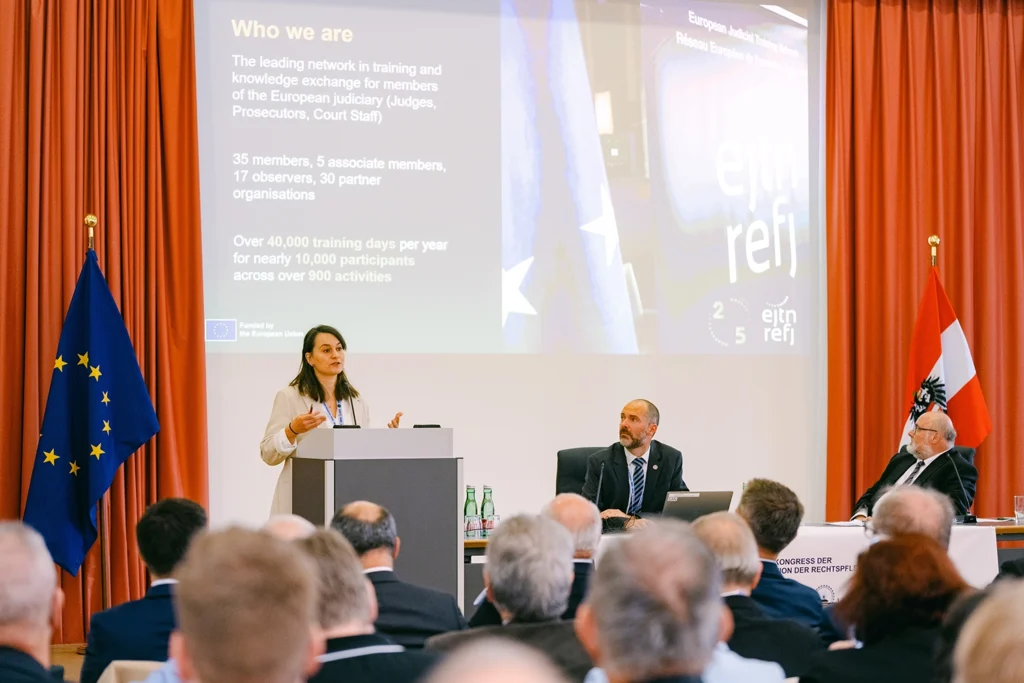
In September, EJTN joined the Congress of the European Union of Rechtspfleger (EUR), further emphasizing the importance of training for court staff, highlighting in particular the active role court staff can play in the digital transformation of justice, and recalling the wide range of EJTN training activities dedicated to court staff.
Throughout the year, EJTN continued working with its partners to identify future training needs of court staff, in particular through close collaboration with EUR.
“EJTN participated in two key events in 2025, reflecting its ongoing efforts to enhance the integration of court staff.”
Judges@Europe Forum
Overview
The fourth edition of the prestigious Judges@Europe Forum, established in response to the European Council Conclusions of March 2021 on strengthening the training of justice professionals, took place on 21-23 May 2025 under the theme ‘Being a Judge in the Digital Era’. Since its creation in 2022, the forum has provided a confidential space for European judges to exchange ideas and insights under the Chatham House Rule, with the aim of consolidating the Rule of Law in the EU and fostering the development of a common European judicial culture. Thanks to the dedication of many EJTN Members, the Judges@Europe Forum continues to be one of the cornerstones of EJTN’s annual training activities.
Achievements in 2025
The 2025 Judges@Europe Forum, organised under the Polish Presidency of the Council of the European Union and held at the Siracusa International Institute for Criminal Justice and Human Rights, brought together 48 judges from all EU Member States (excluding Denmark). Over 500 applicants expressed their interest to attend the 2025 Forum, and the final participants were selected by random lot to ensure balanced representation in terms of nationality, seniority, and gender.
During the three-day Forum, the participants discussed topics such as judicial independence, the freedom of expression, disinformation and misinformation, digital evidence, digital tools available to the judiciary, videoconferencing in judicial proceedings, and alternative dispute resolution. Similarly to previous years, when the Forum has generated important learning materials on the Rule of Law, this year’s Forum continued to highlight this central topic. The event concluded with a touching tribute to Italian magistrates and staunch defenders of the Rule of Law, Giovanni Falcone and Paolo Borsellino, who were assassinated in 1992.
The 2025 Forum benefitted from the valuable contributions and expertise of EJTN’s partners, including the General Court of the European Union, the Polish Ministry of Justice and the European Association of Judges for Mediation (GEMME).
“Over 500 applicants expressed their interest to attend the 2025 Forum.”

Special Project for EPPO Legal & Operational Training
Overview
Given the recent establishment of the European prosecution body, the diverse background of its staff, the experience gathered during the first three years of operations and the ever-growing amount of relevant legislation and jurisprudence, the European Public Prosecutor’s Office (EPPO) requires targeted training programmes focused on developing specific technical skills. These programmes are essential to ensure a shared understanding of the legal principles underpinning the EPPO’s mandate and to promote a common approach to investigating the criminal offences within its competence.
In 2025, the Consortium composed of EJTN and the Academy of European Law (ERA) was awarded a framework contract to implement the tender EPPO/2024/OP/0006 to provide specialised ‘Legal and Operational training services in support of investigations and prosecution to the EPPO’ from 2025 to 2027, with the possibility of a further two-year extension.
Achievements in 2025
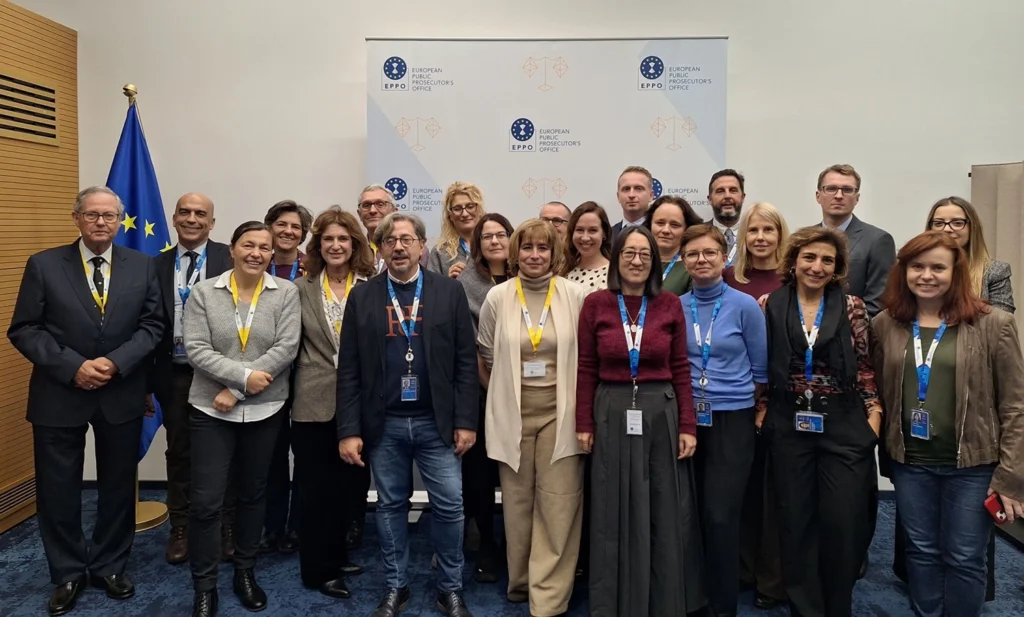
During the implementation of the tender in 2025, the EJTN-ERA Consortium delivered training activities covering legal and operational skills in line with the tender’s technical specifications. These training activities were attended by European Delegated Prosecutors (EDPs) and staff working at the EPPO’s central office in Luxembourg, including legal officers, case analysts, financial investigators, and so on. A total of six webinars and an in-person event on EPPO legal terminology were implemented.
The EJTN–ERA Consortium will continue to deliver a series of webinars in 2026, aligned with training needs identified by EPPO.
“During the implementation of the tender in 2025, the EJTN-ERA Consortium delivered training activities covering legal and operational skills.”
Related content
Pilot Action on Judicial Training
Overview
The Pilot Action on Judicial Training (Western Balkans II Project) was implemented between 2022 and June 2025. Through this project, EJTN supported judicial training institutions in the Western Balkans in strengthening training on the EU acquis and enhancing engagement with the European judicial training community.
The project focused on targeted capacity-building in Serbia and Montenegro, including Training Needs Assessments (TNAs) and the piloting of a ‘Training of Experts on EU Law’ programme, aimed at supporting a core group of justice practitioners in developing their specialisation in EU law.
The training programme covered five areas of judicial specialisation – administrative, civil, criminal, commercial and human rights law – enabling judges and prosecutors to develop EU law expertise linked to their professional practice. In parallel, the project supported participation in EJTN exchanges and seminars, fostering regional cooperation within European judicial training networks.
Achievements in 2025
In its final year of implementation, the project continued to strengthen judicial training capacities in the Western Balkans region. In 2025, three national seminars on EU administrative law, the EU Charter of Fundamental Rights and EU intellectual property law were delivered, 61 justice practitioners were trained, and 17 Western Balkan professionals participated in EJTN events.
Across the full duration of the project, the Pilot Action delivered concrete and measurable results: two Training Needs Assessments, ten national seminars, and 201 justice practitioners trained on specialised EU law at national level. In addition, 88 members of judiciary from the Western Balkans participated in EJTN exchanges, seminars and other activities across Europe.
These achievements contributed to the sustainable development of EU law expertise among judges and prosecutors in the Western Balkans and reinforced their integration into European judicial training networks beyond the conclusion of the Action.
“In 2024, a total of 124 participants received training under this programme.”
Related content
EJTN Single Market Programme (2024-2025)
Overview
Through the EJTN Single Market Programme (2024–2025), which concluded in June 2025, EJTN supported judges, prosecutors, and law enforcement authorities in raising awareness of EU competition law and enhancing cooperation with national and EU competition authorities. Implemented in partnership with the European Commission’s Directorate-General for Competition (DG COMP), the project targeted non-competition enforcers involved in financial and economic crime investigations, helping them identify potential infringements and collaborate more effectively with competition authorities.
The programme combined three components – training sessions, study visits to DG COMP, and the development of practical Guidelines on EU Competition Enforcement – strengthening links between criminal investigations and competition law enforcement and reinforcing coordinated judicial cooperation across EU Member States.
Achievements in 2025
In 2025, a major milestone was reached with the EU-wide dissemination of the publication titled ‘Enforcement of EU Competition Law: Practical Guidelines for Investigative Judges, Prosecutors, and Police Officers involved in the Investigation of Financial and Economic Crimes’, providing a lasting and practical resource for judicial and law enforcement authorities across the EU.
The final year of the project also included five specialised trainings on EU competition enforcement, training 74 professionals and strengthening operational awareness among non-competition enforcers. In addition, one study visit to DG COMP brought together eight participants for direct exchanges with European Commission officials, providing concrete insight into the role and working methods of competition authorities.
Overall, across its full duration, the project delivered 13 training activities and two study visits, reaching 206 judicial and law enforcement professionals.
“In 2025, a major milestone was reached with the EU-wide dissemination of the publication, which provides a lasting and practical resource for judicial and law enforcement authorities across the EU.”